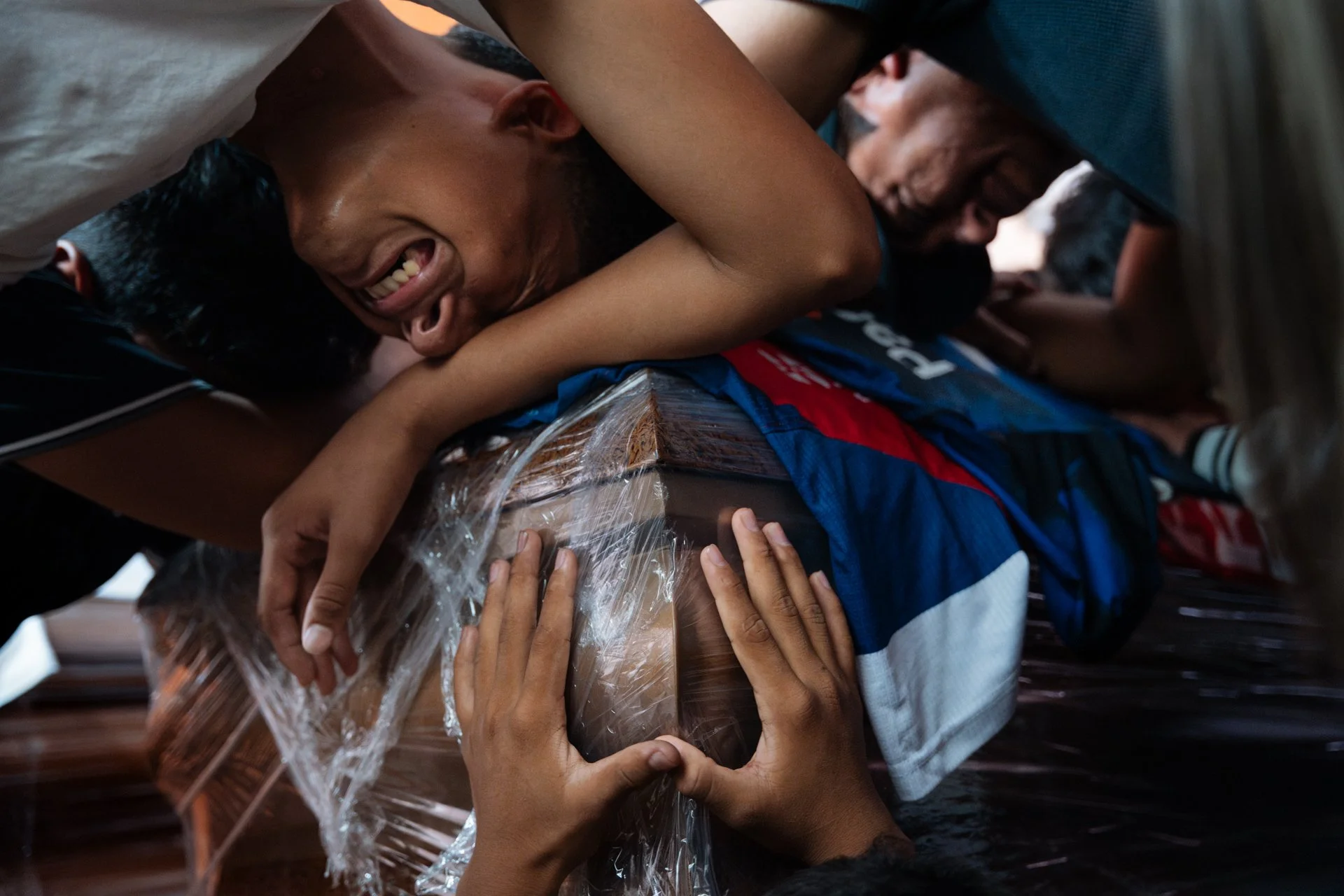
Teammates and the coach of a local football team mourn over the coffin of 15-year-old Ismael Arroyo at his family’s home in the Las Malvinas neighborhood, in southern Guayaquil.
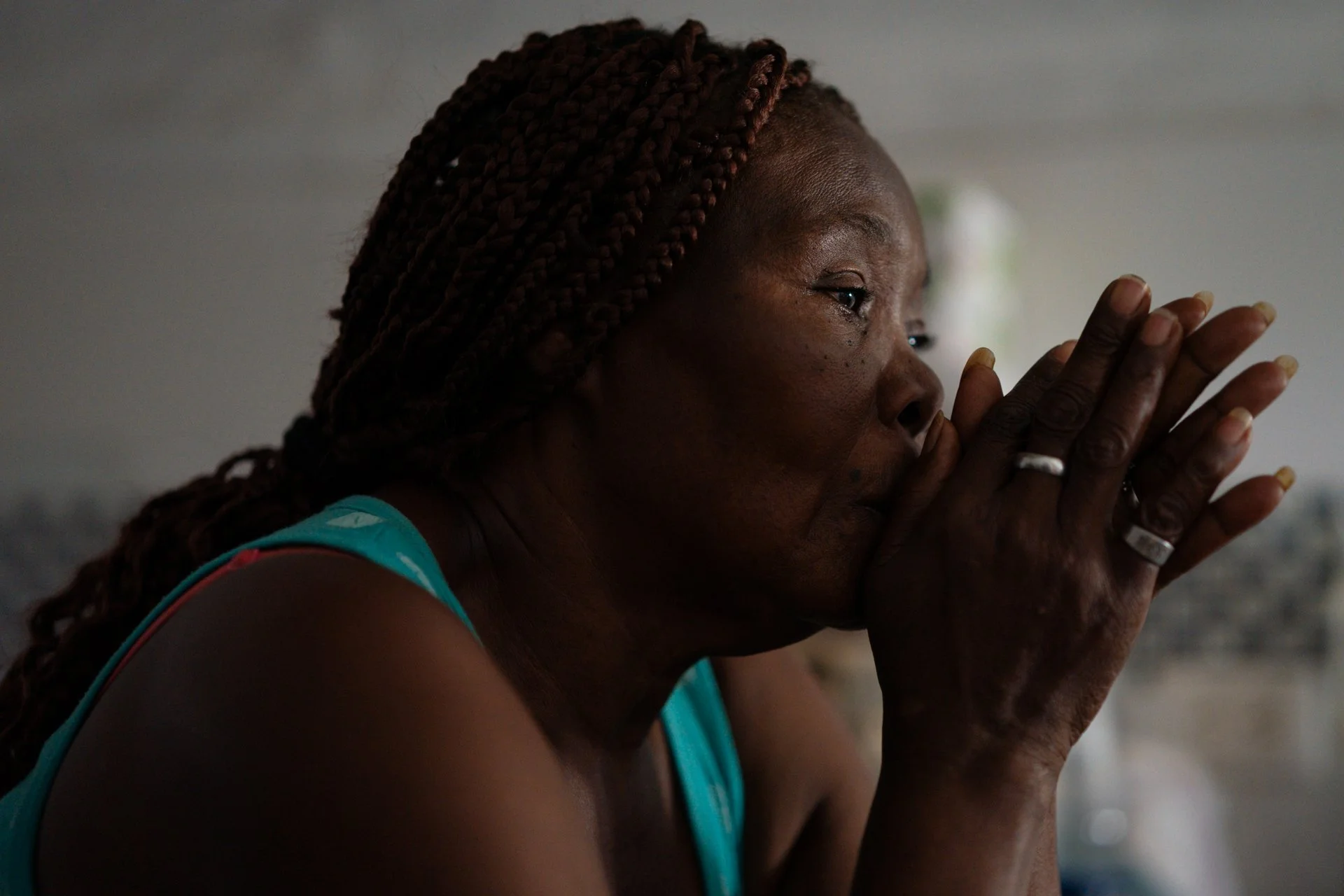
Felicia Valdez, grandmother of Steven Medina, silently watches over her grandson’s coffin during the wake at her home in the Las Malvinas neighborhood.
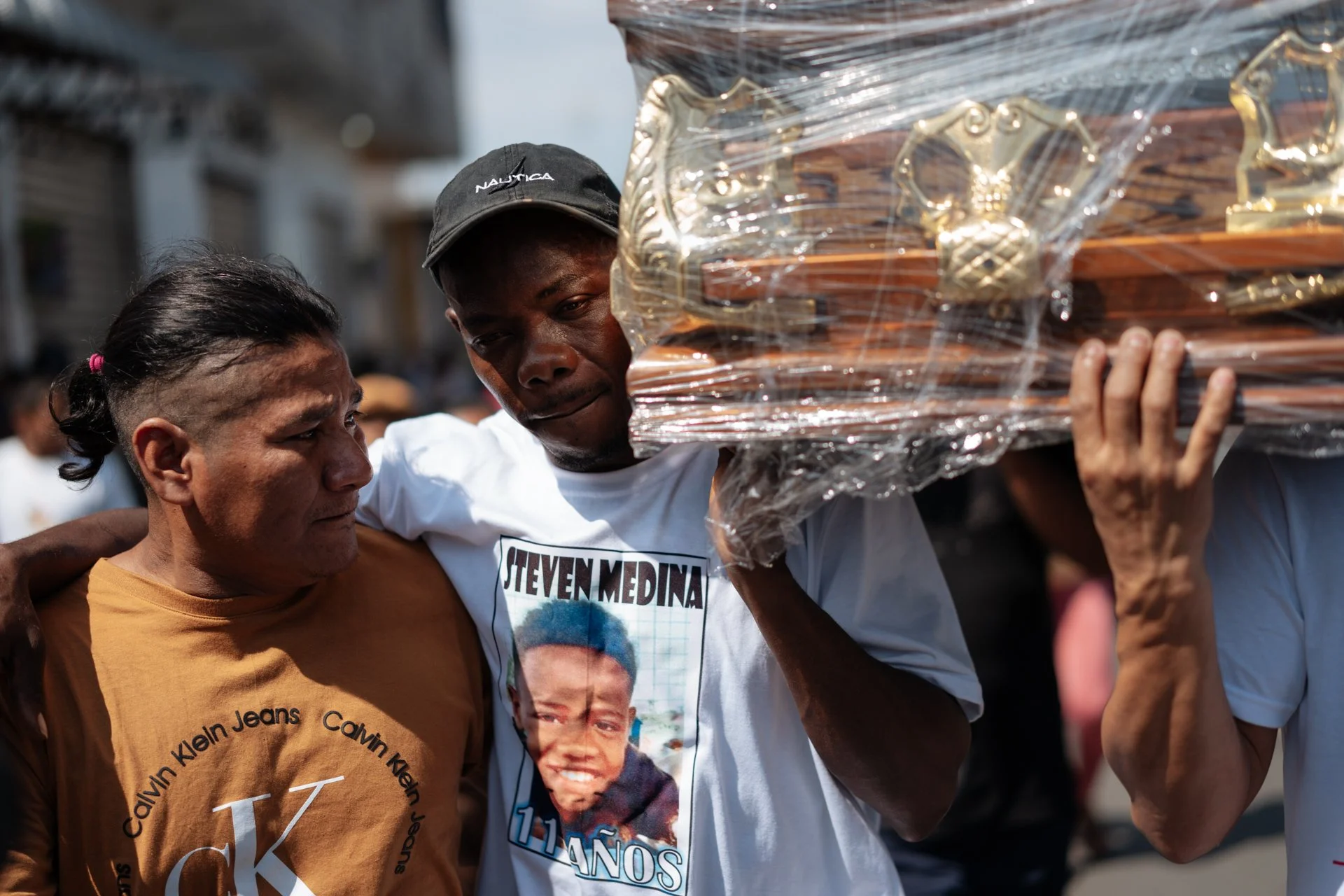
Ronny Medina carries the coffin of his 11-year-old son, Steven, as he walks from his home to the community hall in the Las Malvinas neighborhood, in southern Guayaquil. Steven dreamed of becoming a professional footballer and playing for Emelec, his favorite team. He was a forward at a local football school and wore the number 7 jersey.
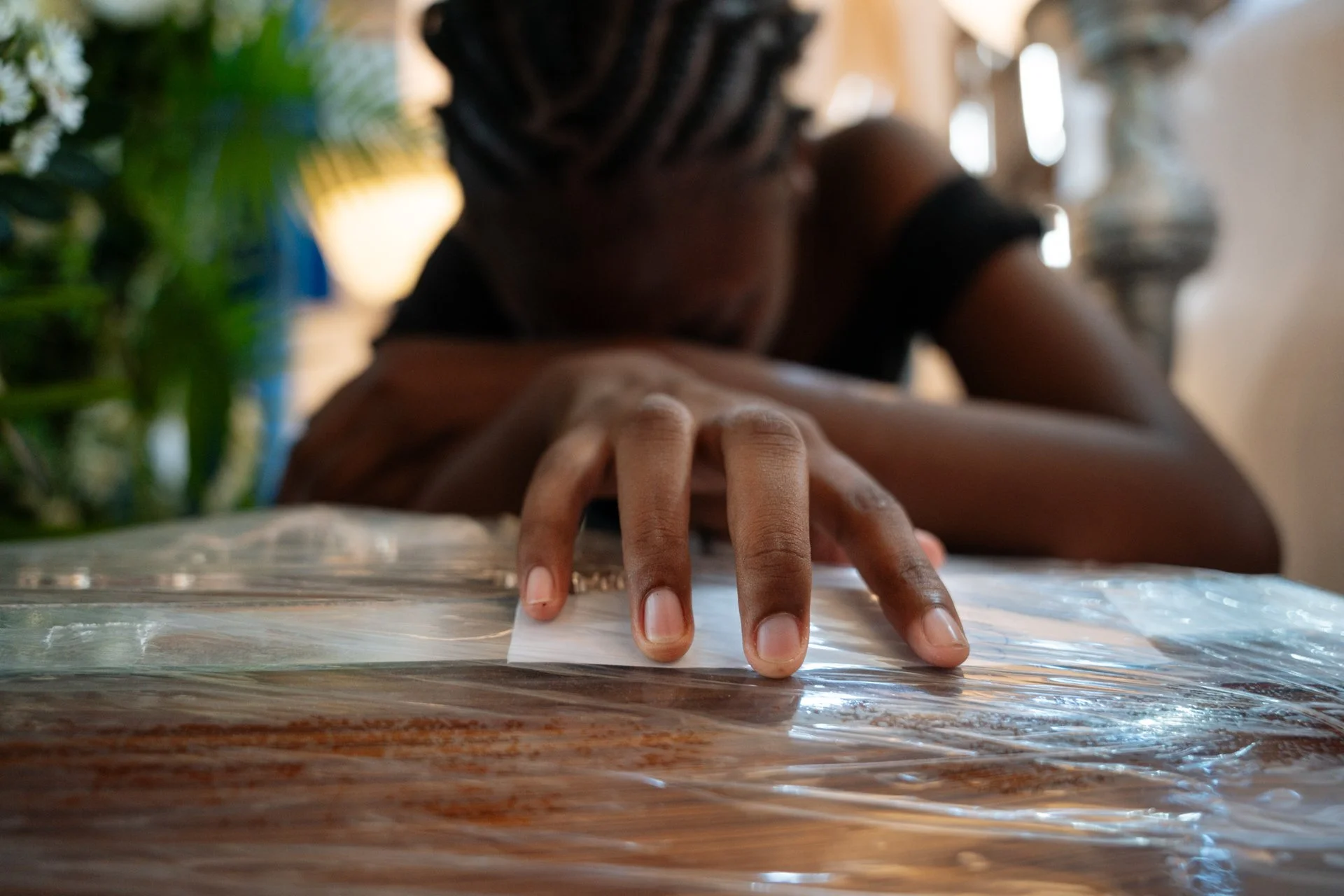
A neighbor weeps over the coffin of 15-year-old Nehemías Zambrano. She recalls that Nehemías used to accompany her to the shop to make sure she arrived safely. He was a caring and respectful boy, loved by those who knew him.
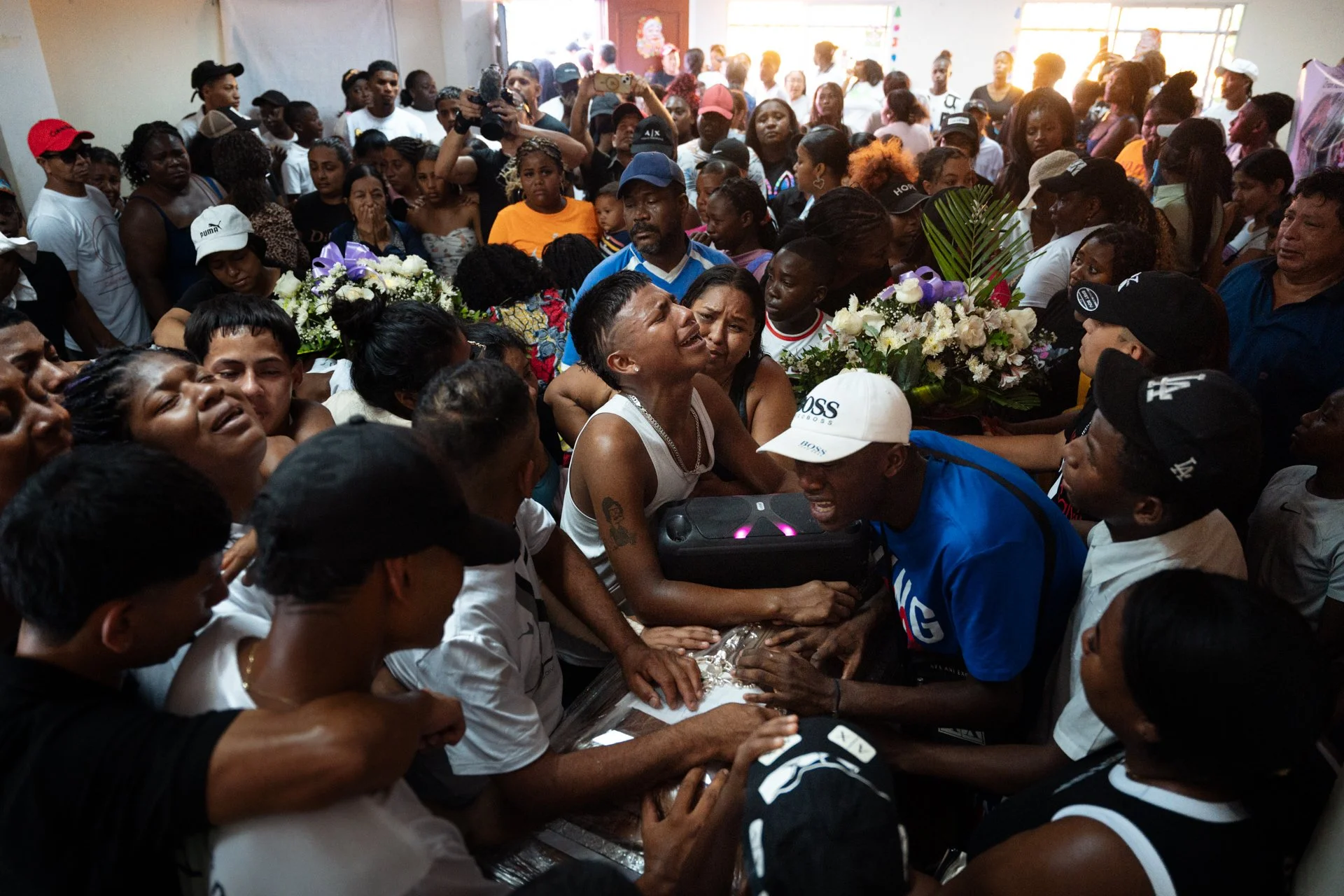
Friends and relatives bid farewell amid cries and tears during the joint wake of the four boys at the community hall in the Las Malvinas neighborhood, in southern Guayaquil. The bodies were laid to rest on January 1, 2025, one day after the Attorney General’s Office confirmed that the remains found in a swampy area belonged to Steven Medina, Nehemías Arboleda, Ismael Arroyo, and Josué Arroyo.
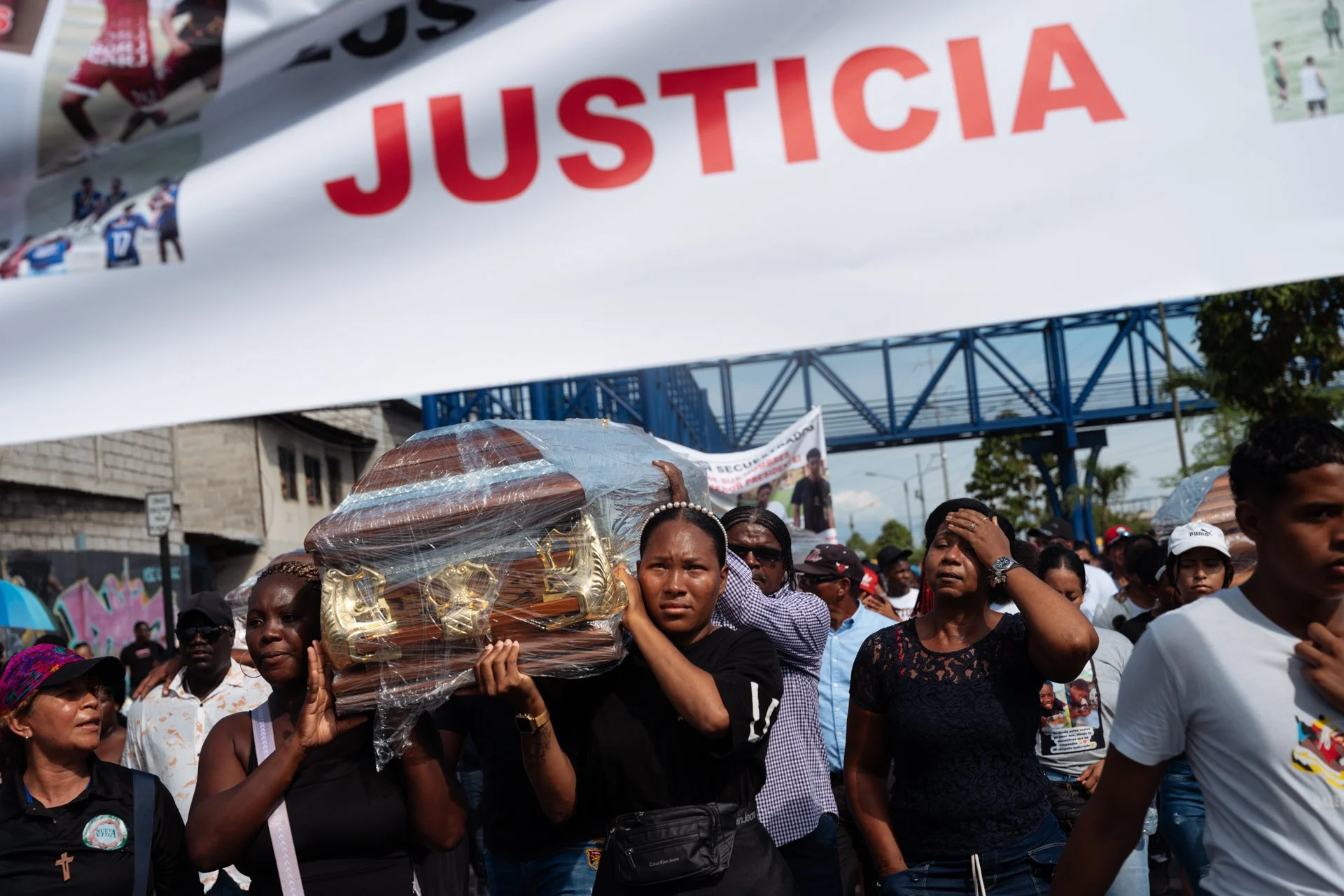
Cousins of one of the murdered boys carry his coffin during the funeral procession along the Perimetral road, in southern Guayaquil, on January 1, 2025. Dozens of people accompanied the cortege, demanding justice for the crime that involved 16 military personnel charged in connection with the disappearance and deaths of the minors.
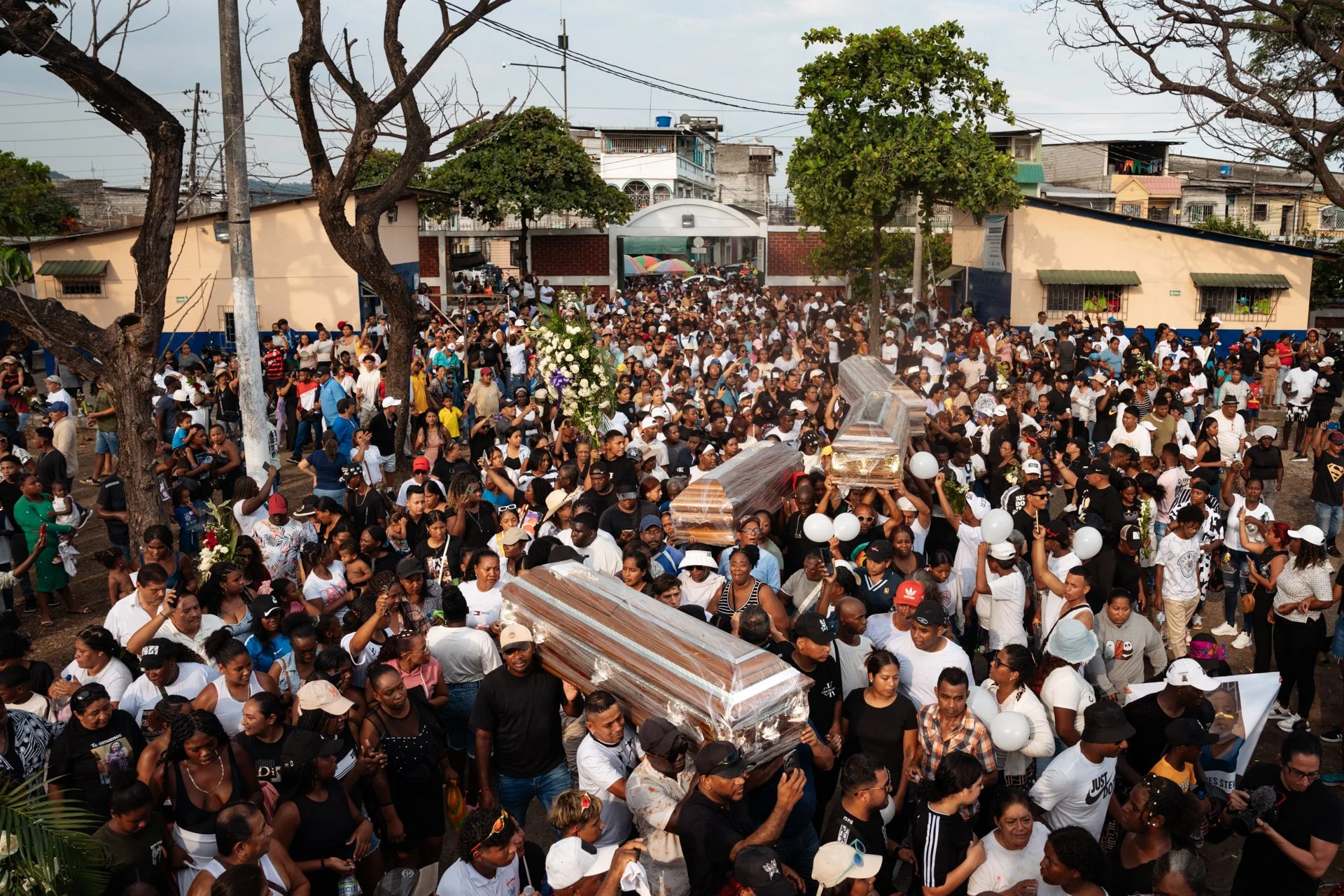
Hundreds of people accompany the arrival of the coffins of the four murdered minors at Ángel María Canals cemetery, in the south of the city. Ismael Arroyo (15), Josué Arroyo (14), Nehemías Arboleda (15), and Steven Medina (11) were detained by military personnel on December 8 after leaving a football practice in Las Malvinas. Their burned bodies were found weeks later in an area controlled by organized crime. The massive procession, marked by chants of “Justice!” and expressions of outrage, became one of the most moving funerals in Guayaquil’s recent history.
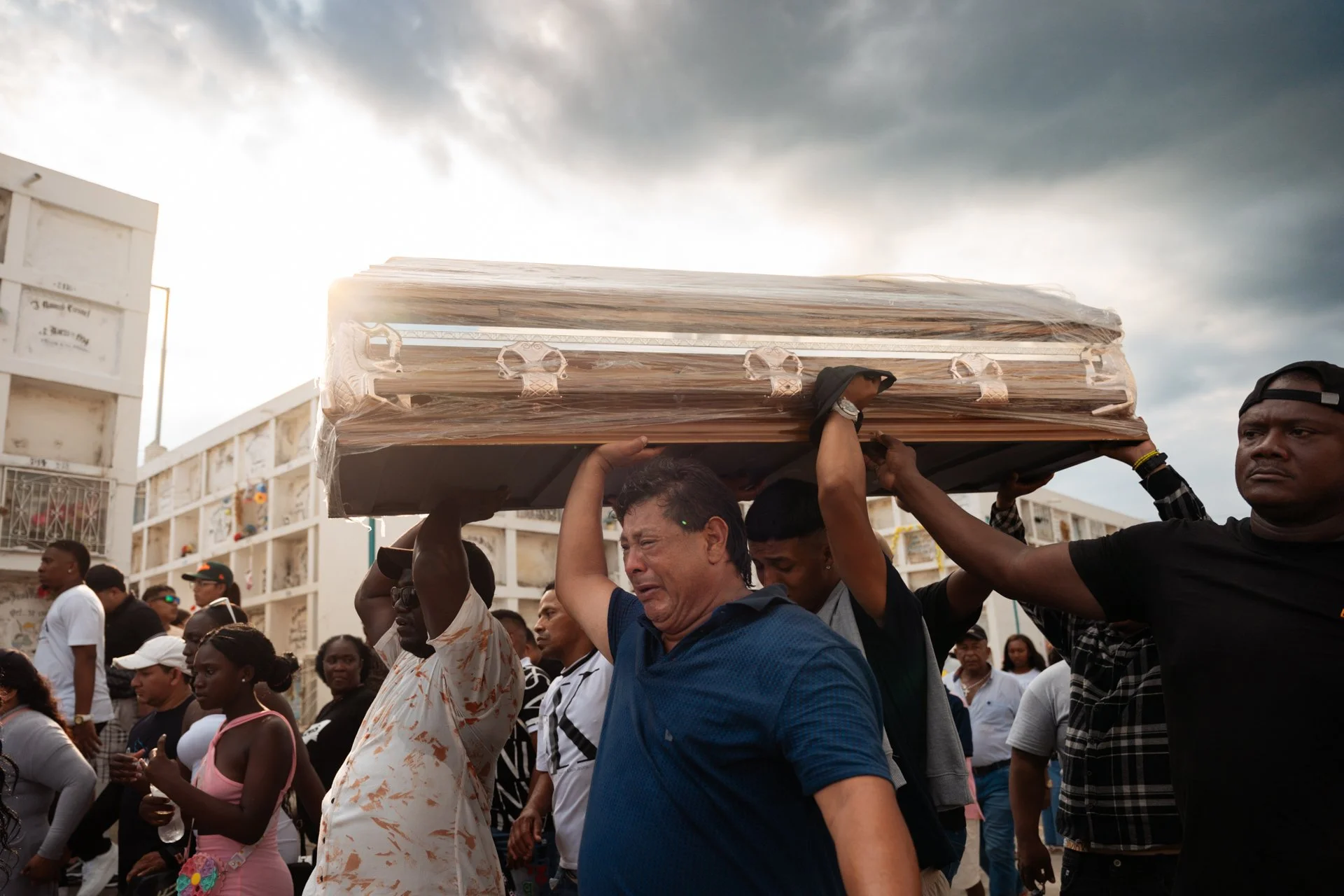
Residents of the Las Malvinas neighborhood carry the coffins of four boys who disappeared on December 8 after being detained by military personnel. Their burned bodies were later found in Taura, near a military base. The case has sparked nationwide outrage and protests demanding justice.
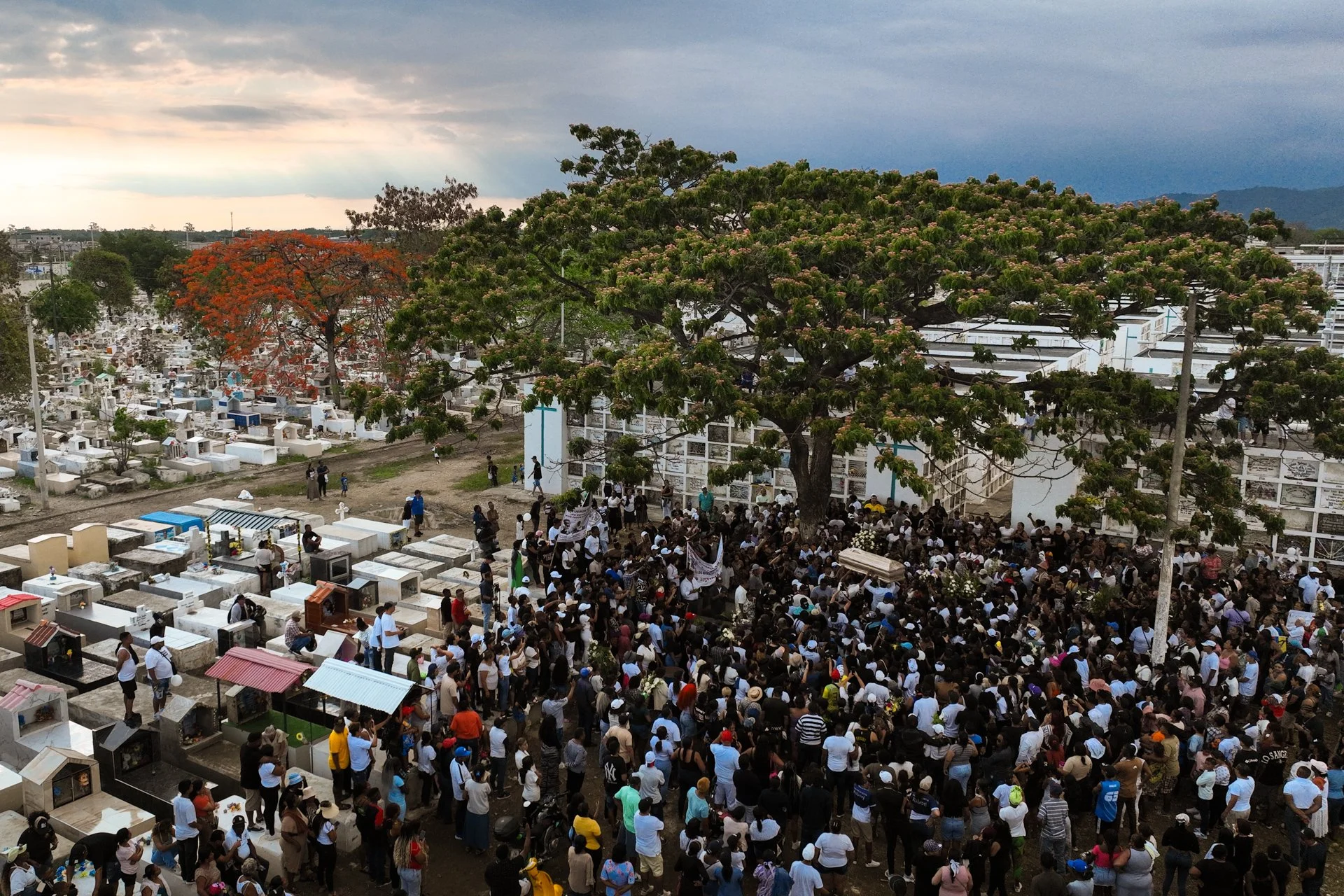
Hundreds of people gather at Ángel María Canals cemetery in Guayaquil for the burial of four boys who disappeared after being detained by military personnel. While the government has pledged transparency, human rights organizations have denounced attempts to slow the judicial process and conceal responsibility.
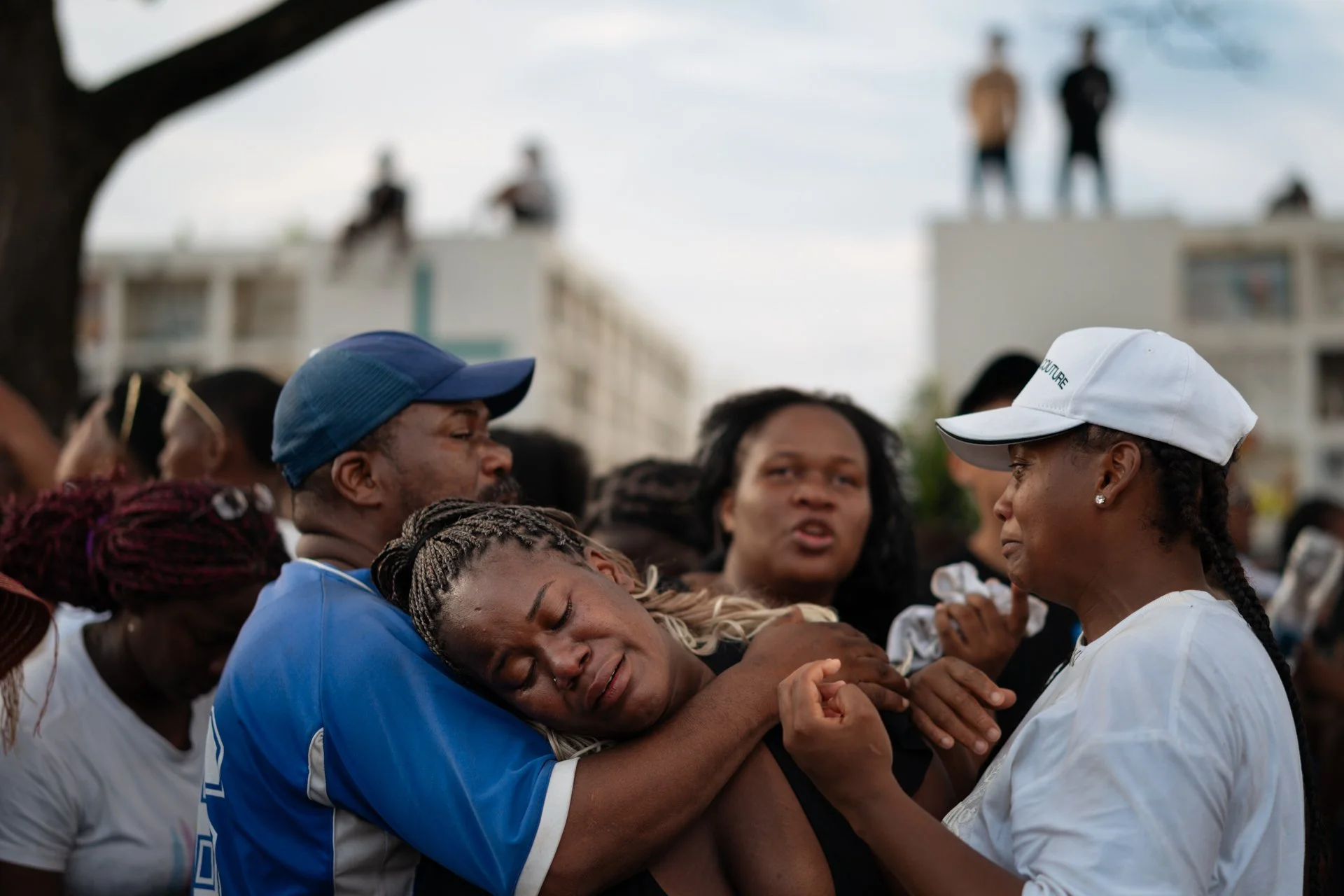
A relative breaks down during the burial of one of four boys killed after being detained by military personnel in Guayaquil. Their burned bodies were found two weeks later in an area near an air force base. Sixteen soldiers are under investigation, while organizations have denounced abuses of authority and racial discrimination.
Funeral for “The four of Malvinas”
The brothers Ismael y Josué Arroyo, 15 and 14 years old, and their friends Nehemías Arboleda, 15, and Steven Medina 11, were detained by a patrol of the Ecuadorian Armed Forces while they were returning home after soccer practice. Days later, their bodies were found burned in a rural area. At first, the president claimed the boys were criminals and had been stealing, a version that was later proven false. During the judicial process, the soldiers involved admitted to having stripped and tortured them and were later found guilty of enforced disappearance.
On the day of the funeral, the boys were mourned and buried in their neighborhood, accompanied by family members and neighbors who demanded justice and truth. The ceremony was marked by grief and by chants against state violence. The case became a symbol of a broader crisis: in the country, there are still dozens of people who have disappeared at the hands of the armed forces.
January 1st 2025 Guayaquil - Ecuador
Reuters